|
|
||
|
|
||
|
|
 |
|
elieve it or not, not that far from Iquitos, Peru you can encounter recently discovered tribes of the Amazon. In the Javari (Yavarí) Valley (the frontier of Peru with Brazil) the Matis Indians (not to be confused with the Matsés) still live like they have for thousands of years – hunting and gathering. At one time, before inventing agriculture and pastoralism, the entire human race survived as hunter-gatherers. Today, only a hand-full of Amazonian tribes practice this ancient way of life. An encounter with a tribe like the Matis is more than a curiosity; it is a glimpse into the past – into our past and gives us a chance to see how our ancestors were.
And how are the Matis Indians? After spending many years researching them and related tribes, I can tell you that they are very nice people and have a society that in many ways is healthier than so called "civilized societies." I remember a friend of mine from Iquitos telling me that the less time a tribe has had contact with civilization, the nicer the people are. After knowing the Matis tribe, I realize that he was right.
Although the Matis Indians do cultivate some horticultural crops to supplement their diet, the Matis are primarily hunters and specialists in blowgun hunting. I remember a tourist guide erroneously telling me that no tribe in the Amazon uses four-meter blowguns for hunting. He was wrong; the Matis natives use four-meter blowguns and curare-tipped poison darts to capture their prey. Similarly, many tourist guides mistakenly told me that it was no longer possible to encounter unclothed indians. Again, they were misinformed, as many older Matis Indians are still very traditional and commonly wear no clothes. To truly appreciate how the Matis Indians live traditionally, you need to view my documentary films which are available on DVD.
The Matis Indians are perhaps the most exotic and
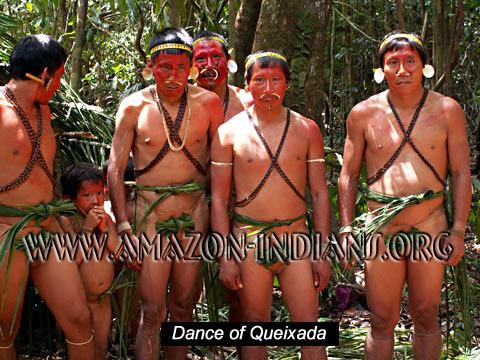
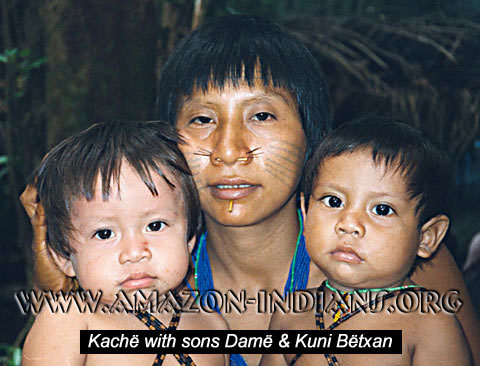
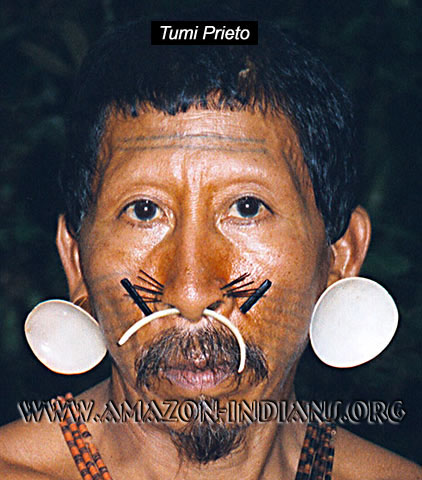
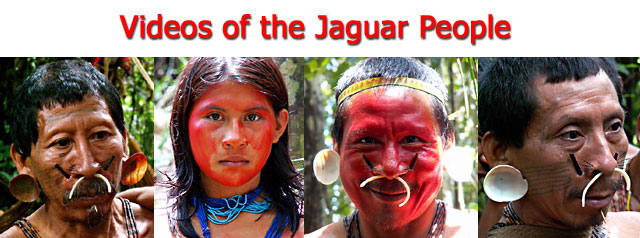
photogenic tribe in the world. They use facial ornamentation and tattoos to
imitate the appearance of a jaguar. They have a very rich culture and many
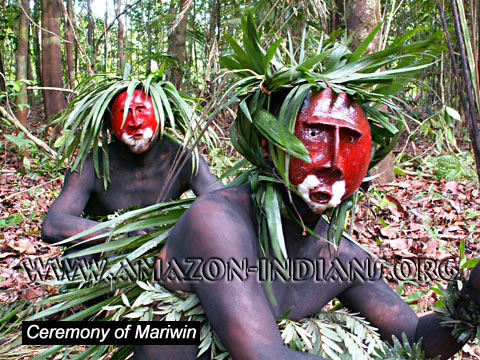
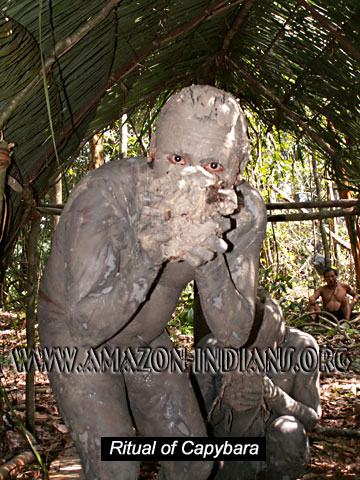
beautiful ceremonies such as the Ceremony of Mariwin, the Ritual of Capybara,
the Dance of Queixada, and the Poison Frog Ceremony. The Ceremony of Mariwin is very colorful
as the participants paint their bodies black, wearing only green leaves and red
masks. The masked beings represent "ancestral spirits" and carry whips
that they most commonly use to strike children and women, an act that is thought
by the Matis to transfer "energy" to the recipient from the spirits. While less colorful than Mariwin, the Ritual of Capybara is more
The Matis natives know many other secrets of the plants of the jungle, including medicinal uses. If they lose their traditions and only use western medicine, many of these secrets will be lost and this is precisely why I as a scientist wish to preserve this important knowledge of plants and preserve the Matis culture.
Currently, the greatest danger to the Matis tribe is hepatitis. Consequently I have been working on a project that has been installing clean water systems (water wells) in indigenous communities in the Javari (Yavarí) Valley that will help eliminate the threat of hepatitis and parasites which are currently common sources of illnesses. To combat malaria, I have been donating microscopes and solar-power energy systems to various isolated native communities in the Javari River area in order that they themselves can diagnose and treat malaria. Without their own microscopes, natives are required to make a long and expensive journey to regional health posts, often dying before being diagnosed or receiving treatment. Having their own diagnostic capabilities allow these indigenous Amazonians to be empowered with their own medical care, and not be dependent on and controlled by outsiders.
To view more photographs of the Matis Indians, please visit the Matis Photo Gallery. Documentary films of my expeditions with the Matis Indians are available on video.
The author, Dr. Dan James Pantone, is the editor of Amazon-Indians.org, an ecologist, and the founder of the Movement in the Amazon for Tribal Subsistence and Economic Sustainability, a nonprofit association organization that is helping indigenous people so that they themselves can preserve their culture and lands in a sustainable and independent manner. |
||


| Return to Main Page | Previous Page | Next Page |
| © Copyright 2004-2012 Dan James Pantone, all rights reserved, Matis Indians |