

|

|
|
|
|
 |
 |
 |
 |
|
|
 |
 |
 |
|
 |
 |
 |

|
|
 |
 |
 |
|
|
 |
|
|
|
|
|
 |
 |
 |
 |
|
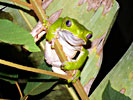
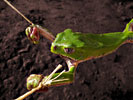
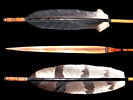
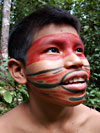
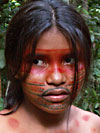
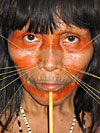
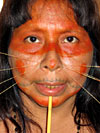
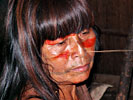
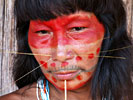
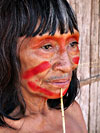
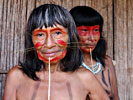
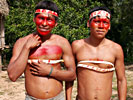
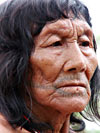
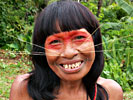
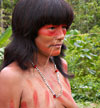
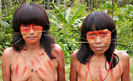
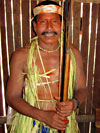
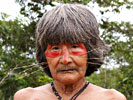
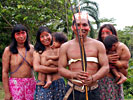
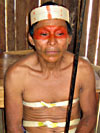
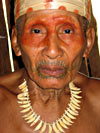
The Matsés Indians (generally referred to as Mayorunas in Brazil) are commonly called the "cat people" due to the distinctive "whiskers" of the women. Currently, there are more than 2200 Matsés residing in the Yavarí Valley of Peru and Brazil, with the majority living in Peru. The Matsés are a panoan-speaking Amazon native tribe and their language is very similar to the dialects that the Matis and Korubo Indians speak. Not only are their languages alike, but their religion and medicinal plant uses are also similar. Probably the main apparent difference between the Matsés and Matis tribes is not their language or culture, but rather their facial ornamentation. The Matsés facial tattoos differ from the Matis in that they consist of accentuated lines around the mouth, extending to the ear base; whereas the Matis have a series of parallel lines along the side of the face. Matsés women wear "whiskers" in their noses which represent the whiskers of cats. Interestingly, the "whiskers" are made from "ribs" of palm leaves. With respect to their languages, the Matis normally talk much faster than the Matsés, but their vocabulary is very similar. The majority of the images presented in this photo gallery were taken during January of 2006 in the Matsés Indigenous Reserve near the Río Gálvez. The Río Gálvez differs from the Río Amazonas in that its water is a dark coffee-color due to the abundance of tannins that are leached from tree bark. In contrast, the color of the Río Amazonas is much lighter due to great amount of sediment. The plant and animal species diversity of the Matsés Indigenous Reserve is among the greatest on the planet and it is common to encounter magnificent ceiba trees as illustrated above. Also presented is an image of the two-toed sloth, Choloepus cf. hoffmann. The two-toed sloth is a common pet in Matsés dwellings. However, the sloth is also hunted and eaten. In contrast, the poison tree frog (Phyllomedusa bicolor) is never eaten, but its poison is used in a ceremony. The Matsés poison frog ceremony plays an important role in Matsés society both as a ritual performed before hunting and as a medicine used for cleansing. While the Matis and many other Amazonian tribes prefer to use blowguns to hunt, the Matsés Indians are experts in the use of bows and arrows. Matsés arrows are very long, about two meters in length and are beautiful works of art in addition to being precision instruments. The fletching is meticulously sewn to the arrow shaft and ornamented with a special weaving that only skilled Matsés men know how to make. Matsés arrows are both beautiful and functional with their construction being much superior to other Amazon tribes, even the Matis. Please note that it is not possible to meet the Matsés with commercial tour guides who have been barred from entering the Indigenous Reserve. If you want to receive more info and resources (books, geographic maps, and articles) on the Matsés Indigenous Territory and the Matses National Reserve, please email me at djpantone@amazon-indians.org.
Original
videos
of the Matis
and photos of the
Matis, Matsés, and Ticuna Indians are
available. If you would like to help the Matsés
preserve their native Amazon culture, please visit www.matses.org. Additionally, if you are interested in
purchasing their craftwork, please email
handicrafts@amazon-indians.org.
For more info, contact Dr. Pantone at djpantone@amazon-indians.org 
|